

Hello Apple Intelligence! Featuring a stunning titanium design. Camera Control. 4K 120fps Dolby Vision, 48mp Main Camera and A18 Pro chip.
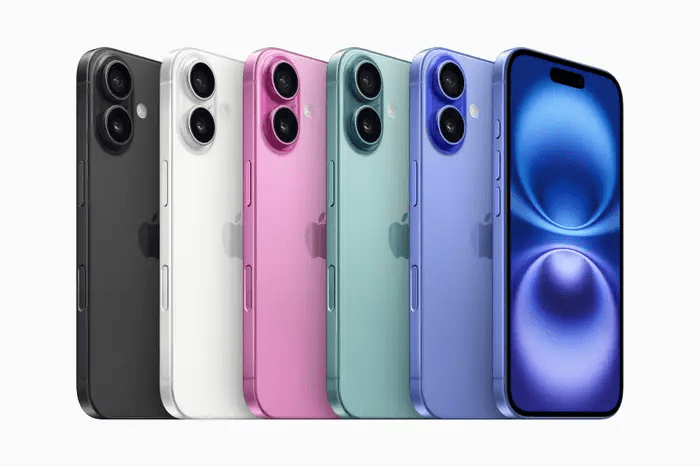
iPhone 16 and iPhone 16 Plus will be available in five bold colours: black, white, pink, teal, and ultramarine. Pre-orders begin Friday 13th September, with availability beginning Friday 20th September.

Apple officially launched the iPhone 16 series during its “Glowtime” event on Monday. All four new models are available to preorder this Friday ahead of the 20th September release date.
The iPhone 16 series has Apple’s new AI suite, Apple Intelligence, as a headlining feature, alongside new-generation processors and some hardware upgrades, including new larger displays for the Pro models — all of which should make for some of the best iPhones to date.
Among other upgrades, the standard iPhone 16 models add a previous Pro model feature, the Action button, and all four iPhone 16 models have a new Camera Control button that enables a range of photo and video customisation options through touch-responsive gestures.
Matching the lineups of recent generations, the iPhone 16 series includes four models: the iPhone 16, iPhone 16 Plus, iPhone 16 Pro, and iPhone 16 Pro Max.
Those hoping for a return of an iPhone “Mini” model are out of luck, as Apple discontinued its Mini lineup starting with the iPhone 14 series.
Likewise, there’s no iPhone 16 “Ultra” model with extended upgrades over the iPhone 16 Pro Max. While it’s an often rumored model, it wasn’t predicted to be released this time around.
iPhone 16: Price
The iPhone 16 lineup is priced the same as the iPhone 15 generation at launch.
- iPhone 16: From £799 for the 128GB
- iPhone 16 Plus: From £899 for the 128GB
- iPhone 16 Pro: From £999 for the 128GB
- iPhone 16 Pro Max: From £1199 for the 128GB
iPhone 16: Cameras
The base iPhone 16 models match the camera specs of their iPhone 15 predecessors with 48MP main and 12MP ultrawide cameras, while the iPhone 16 Pro models have 48MP main, 48MP ultrawide, and 12MP 5x zoom cameras.
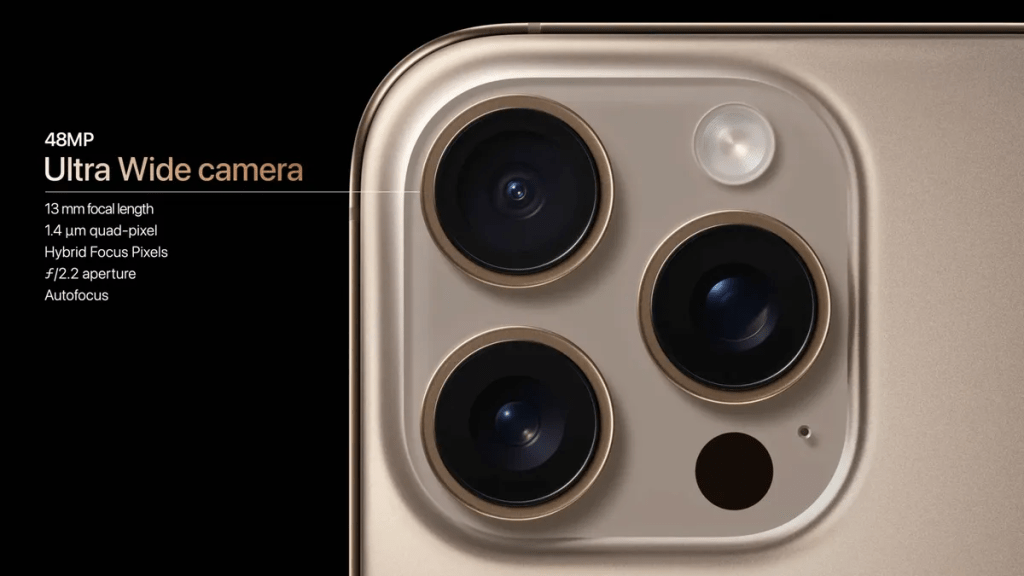
The biggest hardware change Apple made in the iPhone 16 series is upgrading the iPhone 16 Pro’s zoom camera from 3x (as it was in the iPhone 15 Pro) to the same 5x zoom as the iPhone 16 Pro Max.
Beyond that, Apple made the usual assortment of tweaks and upgrades to the iPhone 16 series cameras that won’t necessarily improve photo quality if you’re used to recent iPhone photo quality. As usual, photo quality improvements will be more noticeable if you’re coming from older iPhone models, like the iPhone 12 and older.
For the iPhone 16 and iPhone 16 Plus, Apple gave the ultrawide camera autofocus for better focus, and it supports macro photography, too. The new ultrawide sensor also captures 2.6 times more light for higher-quality photos and should improve quality in low-light conditions.
The base iPhone 16 models also support Spatial Video and Spatial Photo capture for viewing in Apple’s Vision Pro headset. The company also upgraded unwanted noises, like wind, for video recordings in the base iPhone 16 models.
The iPhone 16 Pro models got their own unique upgrades, including a second-generation sensor for the main camera that eliminates shutter lag to help capture subjects in motion, like kids, pets, flowing clothes and hair, and so on.
Apple added video recording in 4K at 120 frames per second (fps), which enables slow-motion recording in 4K resolution. Using four “studio quality” microphones, the iPhone 16 Pro models can also capture Spatial Audio on devices that support it, like AirPods and Vision Pro. Apple also included home entertainment systems as devices that can play Spatial Audio.
iPhone 16: Performance
All four iPhone 16 models run on Apple’s latest A18 processor, but only the iPhone 16 Pro models run on the higher-powered A18 Pro variant.
Apple claims the base iPhone 16 models running the A18 processor are up to 30% faster than the iPhone 15 running the A16 processor, and up to 60% faster than the iPhone 12 running the A14 Bionic processor. GPU performance is also 40% improved, which should lead to better gaming performance, according to Apple’s claims.
As for the iPhone 16 Pro models running the A18 Pro processor, Apple stated it can run AI processes 15% faster than the iPhone 15 Pro’s A17 Pro processor. The company also said the A18 Pro is up to 22% faster than the A17 Pro.
We have yet to see how the base iPhone 16 and iPhone 16 Pro models differ in performance for apps, games, and AI, but we are expecting typically fast and smooth performance on all four iPhone 16 models.
iPhone 16: AI, or ‘Apple Intelligence’
For Apple’s emergent AI service, Apple Intelligence, Apple announced several new features and abilities available in the iPhone 16 series, as well as the iPhone 15 Pro models, which also support Apple Intelligence.
Some new features include:
- A new writing tools feature that can turn short-hand notes into messages or documents in complete sentences.
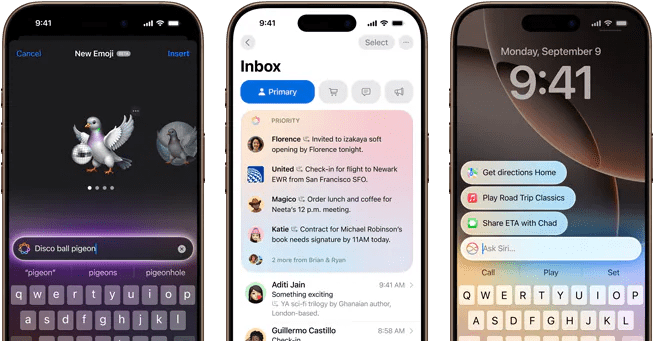
- Creating AI emojis with a typed prompt of what you want the emoji to look like.
- A new Image Playground app to create images from prompts.
- Finding photos based on text descriptions, and arranging multiple photos that match the description into an album or storyline.
- Summarising emails in the Email app and notifications.
- Generating summaries from meeting notes.
- AI suggestions for taking photos based on locations and the subject.
Apple’s AI will also, hopefully, dramatically improve Siri. You’ll be able to type queries to Siri, now. Siri will also recognize what you’re seeing on the screen and act on it, per your request. For example, if someone sends you a song name in a message, you can ask Siri to “play that,” and your phone will start playing the song without heading to the music app yourself and searching for the song manually.
Siri will also do more for you with voice commands, like sending a photo that’s on your screen to a friend over the Message app.
The company made it clear that it will prioritise privacy by running queries on-device when possible or on Apple’s own servers.
Apple Intelligence will be a free update when the beta starts to roll out in October with iOS 18.1. More AI features will also roll out over the next few months.
iPhone 16: Battery life
Apple claimed a “big boost in battery life” for the base iPhone 16 models. According to the company’s specifications, the base iPhone 16 can playback 22 hours of video, whereas the iPhone 15 could do 20.
The company also claimed the iPhone 16 Pro Max has the “best iPhone battery life ever.” According to Apple’s specs, the iPhone 16 Pro Max could achieve 33 hours of video playback, while the iPhone 15 Pro Max could do 29. The improved battery life on all four models is thanks to larger batteries and enhanced efficiency from the iOS 18 operating system and the A18 and A18 Pro processors.
If the iPhone 16 Pro Max has the “best iPhone battery life ever,” we might expect it to beat the iPhone 15 Plus, which obtained the highest score we’ve ever recorded on a phone.
iPhone 16: Displays
For the first time since the iPhone 12 series in 2020, Apple has changed the display size in its iPhones, but only for the iPhone 16 Pro models.
The iPhone 16 Pro’s display grew to 6.3 inches from the iPhone 15 Pro’s 6.1 inches, and the iPhone 16 Pro Max’s display increased to 6.9 inches from the iPhone 16 Pro Max’s 6.7 inches.
- iPhone 16: 6.1-inch Super Retina XDR OLED display, 60Hz
- iPhone 16 Plus: 6.7-inch Super Retina XDR OLED display, 60Hz
- iPhone 16 Pro: 6.3-inch Super Retina XDR OLED, 120Hz ProMotion, always-on display
- iPhone 16 Pro Max: 6.9-inch Super Retina XDR OLED, 120Hz ProMotion, always-on display
No upgrades were made on the brightness the iPhone 16 series can achieve (2000 nits), but they can go as dim as 1 nit. As a parent putting babies and toddlers down for bed, this is a great addition. Or, it could make it more comfortable to check something on your phone right before closing your eyes, like whether you set the alarm.
Apple also upgraded the iPhone 16 series with its second-generation Ceramic Shield glass, which the company claims is 50% tougher than the first generation introduced with the iPhone 12. Apple also boasts it’s twice as tough as “any other phone glass.”
The base iPhone 16 models still don’t feature Apple’s ProMotion displays with a 120Hz refresh rate, and they continue to lumber along at an outdated 60Hz. There’s nothing inherently wrong with 60Hz displays, but we’d expect a higher refresh rate that delivers super smooth animations and a premium experience on phones that start at £799.
iPhone 16: Design
The base iPhone 16 models got a refreshed oval camera design with vertically aligned cameras that hark back to the iPhone X/XS series, while the iPhone 16 Pros retain the same three-camera design year over year.
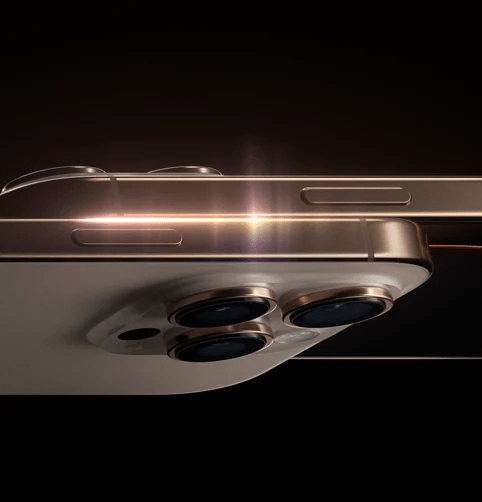
Apple said the iPhone 16 Pro models have the thinnest borders “on any product” they’ve released. Still, due to the new display sizes, the iPhone 16 Pro models are slightly larger and heavier than the iPhone 15 Pros.
The base iPhone 16 models continue to feature an aluminum frame, while the iPhone 16 Pro models carry over the titanium frame introduced with the iPhone 15 Pro generation. All four iPhone 16 models have the softer contoured edges Apple introduced with the iPhone 15 generation.
The base iPhone 16 models come in new color options, including Ultramarine (a kind of blue), Teal, Pink, White, and Black. The iPhone 16 Pro models come in Black, White, Natural, and Desert Titanium colour options.
iPhone 16: New buttons
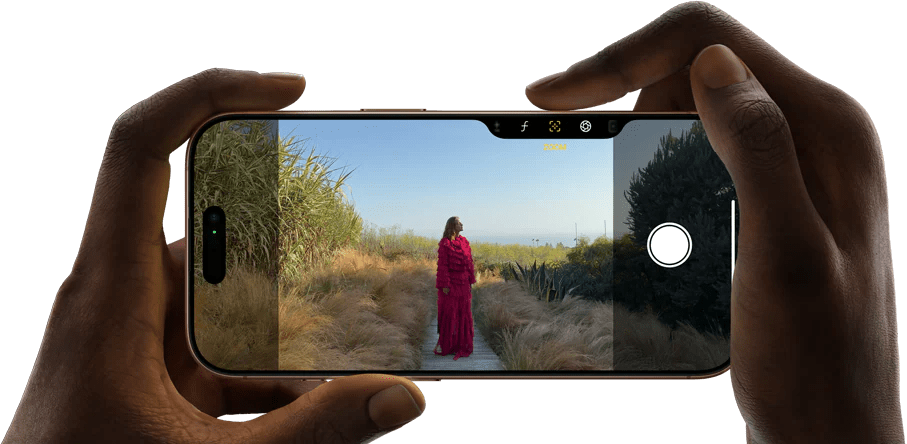
Apple introduced a new button called the Camera Control button in all four iPhone 16 models. It’s a tactile switch with haptic feedback that registers touch and gestures, and various combinations of presses, taps, and swipes enable several functions.
On the entire iPhone 16 lineup, pressing the Camera Control button like you would any button opens the camera app, and pressing it again takes a photo. Pressing and holding the button starts a video recording. A light touch on the button while in the camera app reveals zoom control, and a double light touch brings up finer controls, like depth of field and exposure.
On the iPhone 16 Pro models, the Camera Control button will also let you switch between camera lenses and photographic styles.
Apple touted that the Camera Control button works in third-party apps like Snapchat and that its functions are widely available for developers to add to their apps.
Apple has also replaced the iconic silent switch on the base iPhone 16 with the Action button that was previously introduced with the iPhone 15 Pro models. Starting with the iPhone 16, it seems we can say goodbye to the silent switch, which featured on the very first iPhone in 2007.
Apple upgraded the Action button’s usefulness by adding third-party app support. It showed the Action button unlocking a car with the FordPass app, for instance. The Action button also offers its usual functions, like enabling or disabling a Focus mode, opening the camera, toggling the flashlight on or off, starting or stopping a voice memo, opening the Magnifier app, opening the Translate app, enabling a shortcut in the Shortcuts app, or quickly accessing an accessibility feature.




 Entertainment Swindon
Leave a comment