
Swindon is a town steeped in history, beyond Isambard Kingdom Brunel and the Great Western Railway, from poets to links to Royalty going back to Henry VII. If you move to the surrounding area, Swindon gets even richer in history, from the Romans to the Stone Age and in more modern times its links to the British Armed Forces.
STEAM Museum:

The current roster of special events and exhibitions at Steam – Swindon’s Museum of the Great Western Railway includes an exhibition devoted to the years in the early to mid-20th century during which Britain’s railway companies competed for the distinction of being the fastest. There is also a display of nameplates from the work horse HST locomotives which carried millions of passengers to and from Swindon for some 40 years before their recent retirement from the line.
Click HERE for more details.
Swindon Railway Village Museum:

Since 1995, Swindon Heritage Preservation (Formerly The Mechanics’ Institution Trust) has been working to conserve the precious stories and places that tell Swindon’s story.
We are Swindon’s only building preservation Trust, combining social impact and community benefit with building restoration, conservation and history.
Click HERE for more details.
Lydiard House Museum:

Discover the enchanting history of Lydiard House – a striking Grade I listed building at the heart of Lydiard Park. Wander through the elegant State Rooms, where ornate plasterwork and original family furnishings are on display alongside portraits and photographs of the St John family, who lived here from Elizabethan times.
Home to the St John family for over 500 years, the house dates back to the medieval period, which developed into a great two-level hall over time. In the 1740s John 2nd Viscount St. John and his wife Anne Furnese took over the estate and saw Lydiard House redeveloped into a grand Palladian home. As you walk through Lydiard House, you will notice many ornate and decorative details, including columns, pediments and door-cases.
Today, Lydiard House Museum offers a vibrant programme of special exhibitions and family activities. Visit our ‘Exhibitions’ and ‘Family Activities and Events’ pages to find out more.
Click HERE for more details.
Richard Jefferies Museum:
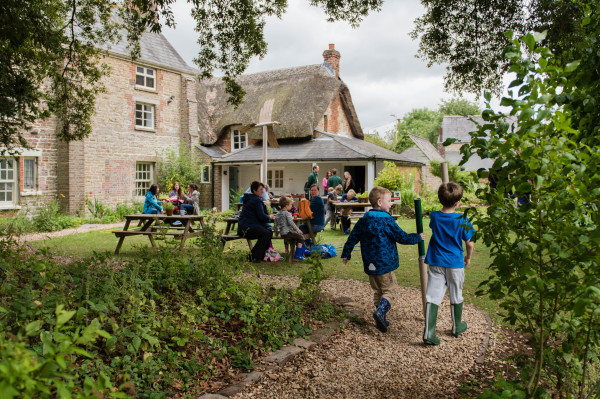
Victorian nature writer and campaigner for workers’ rights Richard Jefferies is arguably the most prominent literary figure of the Swindon area. His birthplace museum at Coate – richardjefferies.org – is filled with relics of his life, rare editions of his books and a large collection of memorabilia. Run by a team of volunteers, the museum also runs special arts-related events with an emphasis on the things the author held most dear.
Click HERE for more details.
The Science and Innovation Park:

Explore 300,000 historic objects from the Science Museum Group Collection in our innovative collection management facility at the National Collections Centre.
Walk among hundreds of large objects—including a Spacelab 2 X-ray telescope carried into orbit by the US Space Shuttle Challenger and an iconic Glasgow Tramcar—on a colourful floor grid, explore the aisles of over 30,000 metres of shelving containing objects from Stephen Hawking’s office, and even a toy duck that helped a spacecraft land on a comet.
Click HERE for more details.
The Fox Talbot Museum
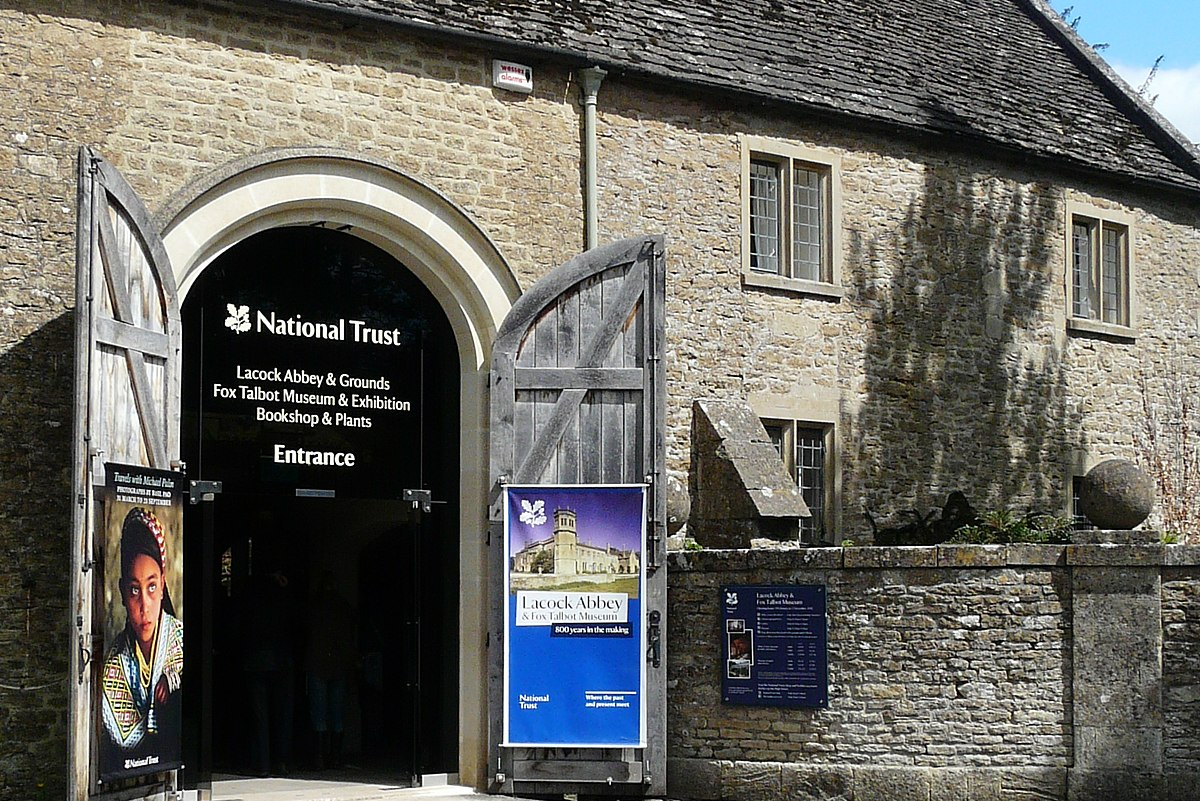
Find out about the father of photography, William Henry Fox Talbot. Lacock museum is a wonderful day out, especially if you are a fan of photography.
Located in the picturesque village of Lacock, Wiltshire. Built on the old foundations of a former Nunnery the building has Lacock Abbey with it’s unique character and architecture styles is one of the places to visit in the county. Visitors can expect to find great examples of Medieval rooms, Cloister court & a Tudor Courtyard.
The Museum itself celebrates the achievements of a former Lacock resident, William Henry Fox Talbot. Who is famous for his important contributions to the invention of Photography. Fox Talbot is considered as one of the founders of modern photographic processes.
In 1835, Fox Talbot created the first ever photographic negative. It was taken of a small window at his home, Lacock Abbey.
There is much to see at the Fox Talbot Museum, you can lean about the man, William Henry Fox Talbot and his word with Photography. The Museum has an extensive collection of historical photographs and often has exhibitions showcasing various photographers work.
Click HERE for more details.
The Wiltshire Museum:

Set in the historic market town of Devizes the Wiltshire Museum is housed in Georgian and Victorian buildings – all Grade II listed.
The Museum has been located here since 1874 and contains the largest collection of Early Bronze Age gold ever put on public display in England. Award-winning displays transform public understanding of the era and feature 500 Stonehenge period objects, including 30 pieces of gold treasure, together with archaeology, art, natural history, local history, and an Archive and Library which is open to the public.
The Wiltshire Museum is among the most popular visitor attractions in Devizes. Many of its displays relate specifically to the town and its Norman castle, but others relate to the county as a whole. Many reflect the earliest traces of human habitation, and these include a wind instrument fashioned from a human lower leg bone.
Click HERE for more details.
Museum & Art Swindon:

Right in the heart of Swindon, the Swindon Museum and Art Gallery is located in the Civic Offices, Euclid Street.
The museum is home to artefacts dating back as far as the mysterious era when the town was nothing more than a modest agricultural hamlet whose inhabitants scratched a living on top of a hill. There are artefacts from every era since, covering both the natural world and Swindon’s diverse industrial heritage. The museum is also keenly aware that history is the story of people rather than just that of objects.
Click HERE for more details.
The Alexander Keiller Museum Avebury:

Situated at the prehistoric monument of Avebury, the Alexander Keiller Museum houses one of the most important prehistoric archaeological collections in Britain, housed in the Stables Gallery, and including many artefacts from the World Heritage Site (WHS) monuments. The admission fee includes access to both the Stables and Barn Galleries. The Barn Gallery (belonging to the National Trust) tells the story of the WHS, it’s monuments, and the people associated with it.
The Museum, which sits within the Avebury WHS, is in the freehold ownership of The National Trust and in English Heritage guardianship on behalf of the Secretary of State for the Department of Culture, Media and Sport; the museum collection is on loan from the DCMS.
The Alexander Keiller Museum is filled with information and relics relating to the ancient stone circle and the ancient sites throughout the surrounding countryside.
Click HERE for more details.
The Cricklade Museum:

The Cricklade Museum was established by the Cricklade Historical Society who are responsible for its maintenance.
The Museum is a key tourist attraction for Cricklade.
Despite its small size, houses more than 12,000 items in its collection.
The aim of the Museum is to collect, conserve, research, interpret and provide public access to objects associated with the Cricklade district thereby encouraging people to acquire knowledge of local history.
The main strength of the collection lies in objects from the 19th and 20th centuries, as well as the archive of local family history, family trees, maps and a properties index together with a veritable mine of information held in the Museum’s archive.
Click HERE for more details.
Highworth Museum:

Highworth has it’s very own museum housed in the Old Lloyd’s bank strong room, not something you find on every High Street! Here Highworth Historical Society will be displaying exhibits, information, timelines and pictures covering different aspects of Highworths history. Find out about the old Railway route linking Highworth and surrounding villages to the great Swindon Railway works. Or maybe more about the official ABBA fan club? This will change every quarter looking at different eras from Highworth’s rich and varied history. There is a digital visual display showing Highworth through the ages.
Click HERE for more details.
Cirencester’s Corinium Museum:
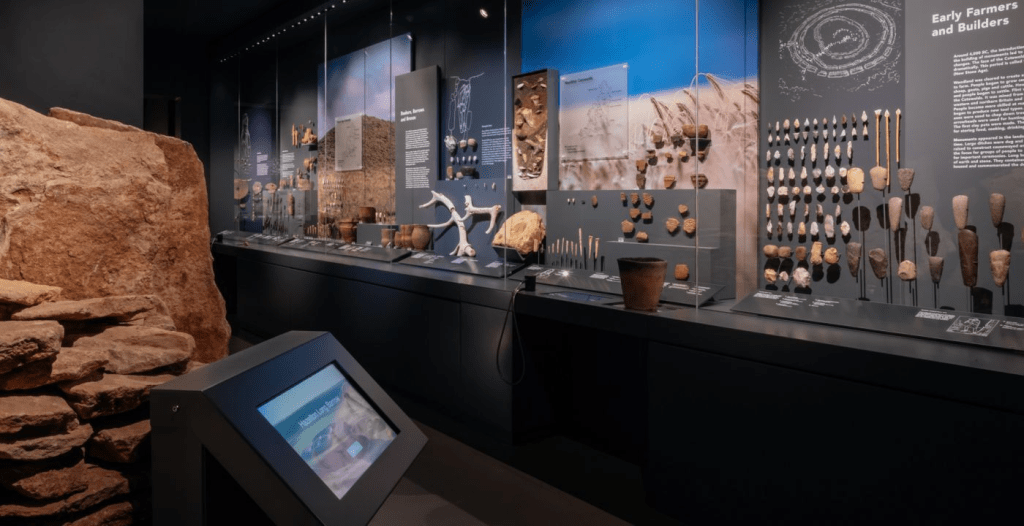
Cirencester’s Corinium Museum houses one of the country’s finest collections of Roman objects, which is hardly surprising in view of the town’s ancient status as a major Roman community.
The Corinium Museum is located at the heart of Cirencester, the ‘Capital of the Cotswolds’. Our principal collection consists of the highly significant finds from the Roman town of Corinium, today known as Cirencester. However, the museum today is much more than that, taking you on a journey through time and charting the development of the Cotswolds from its prehistoric landscape to the modern day.
Explore the light and modern galleries that offer you an exceptional interactive experience. Discover thousands of objects on display, from Prehistoric tools, Roman mosaics, Anglo Saxon grave goods to Medieval sculpture! Every object has a story to tell.
Click HERE for more details.
The REME Museum:

The REME Museum at Lyneham – http://www.rememuseum.org.uk – covers the entire history of the Corps of the Royal Electrical and Mechanical Engineers, and its collection runs to tend of thousands of objects ranging from intricate tools to specialist vehicles based on tanks. There are uniforms, weapons, decorations and personal memorabilia of personnel past and present.
Museum in the Park:

An innovative museum set in a park, it has imaginative displays including dinosaur bones, a Roman temple and the worlds first lawnmower! There are also family activity packs, special events and exhibitions throughout the year.
Location: From junction 13 of M5 take A419 Ebley bypass towards Stroud.
Stratford Park, Stratford Road, Stroud, GL5 4AF.
Click HERE for more details.




 Entertainment Swindon
Leave a comment