
Gough’s Cave at Cheddar – home to Cheddar Man is now also identified as having one of the earliest domestic dogs in the world.
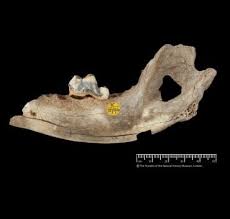
New research published in Nature focuses on a 14,300 year old dog jawbone discovered in Gough’s Cave and given to the Natural History Museum by the 5th Marquess of Bath, owner of the Longleat estate which owns Cheddar.
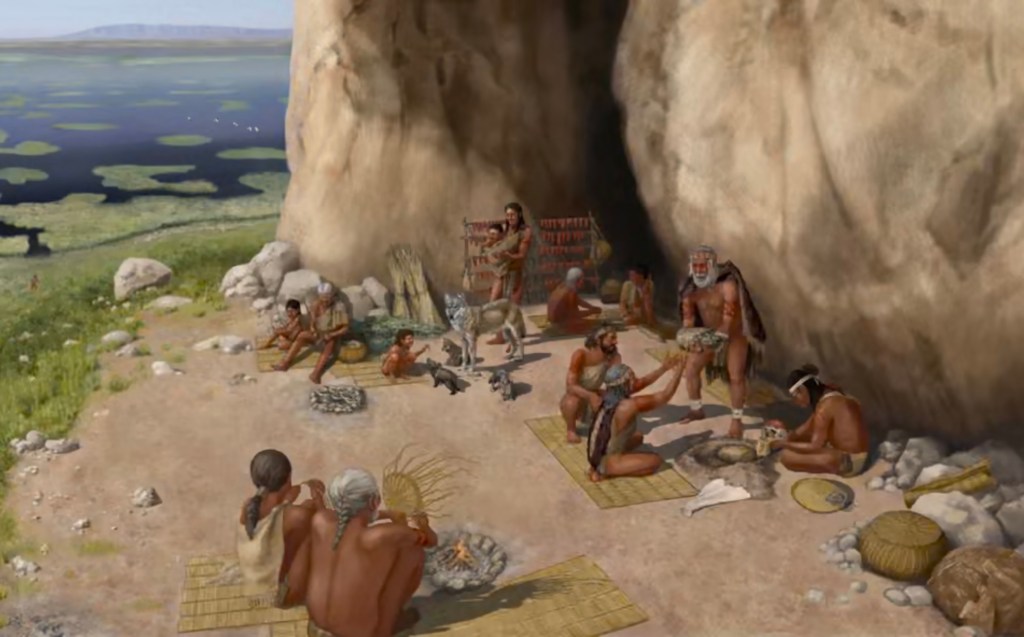
It found the world’s oldest genetic evidence for domestic dogs identified at Gough’s Cave and in Pınarbaşı in Türkiye.
His descendant, Ceawlin Thynn, the 8th Marquess of Bath, said: “Ongoing research on Cheddar finds continues to inform and expand our knowledge of the lives of our ancient ancestors.
“The dog jawbone from Gough’s Cave that has been identified as the earliest known domesticated dog in the UK was among many specimens discovered during the excavations in Gough’s Cave between 1927 and 1931 was donated to the Natural History Museum in 1928 by my great-grandfather, Thomas Thynne, 5th Marquess of Bath.
“Today’s paper is an exciting step in learning more about the history of the caves and the part they played in the lives of our ancestors.”
Fenia Vitali, General Manager at Cheddar Gorge & Caves, said: “To have both the oldest nearly complete human skeleton and the earliest example of a domesticated dog in Europe, indeed one of two in the world, found at Cheddar is quite incredible and we look forward to sharing more information with our visitors in the coming months.
“We’re delighted to have been working with the with Natural History Museum over many decades and are excited to see what discoveries are made in the future.”
Dr James Ford, Curator for the Longleat Estate, said: “Specimens from Cheddar will no doubt continue to contribute in crucial ways to our understanding of the lives of our early ancestors in Britain.
“The oldest near-complete modern human skeleton found in Britain, dubbed ‘Cheddar Man’, was discovered in Gough’s Cave in 1903 and is now dated to the Mesolithic, about 10,000 years ago. The identification of the earliest known domesticated dog in Britain gives a fascinating insight into the lives of the even earlier inhabitants of the area.”
The history of discovery of ancient finds at Cheddar began with the opening and development of the caves on the south side of the Gorge as tourist attractions during the 19th century by enterprising tenants of the 4th Marquess of Bath, which involved extensive clearances and disturbances, in the course of which many finds were unearthed, some of which were displayed at the caves as additional attractions while others were removed by collectors.
Following various digs in the 20th century, in 1987 a project to excavate remaining Ice Age sediment within the entrance to Gough’s Cave was begun by the Natural History Museum. It was at this point that the Longleat Estate lent the ‘Cheddar Man’ skeleton, and other significant finds, to the Natural History Museum on long-term loan.


 Entertainment Swindon
Leave a comment