
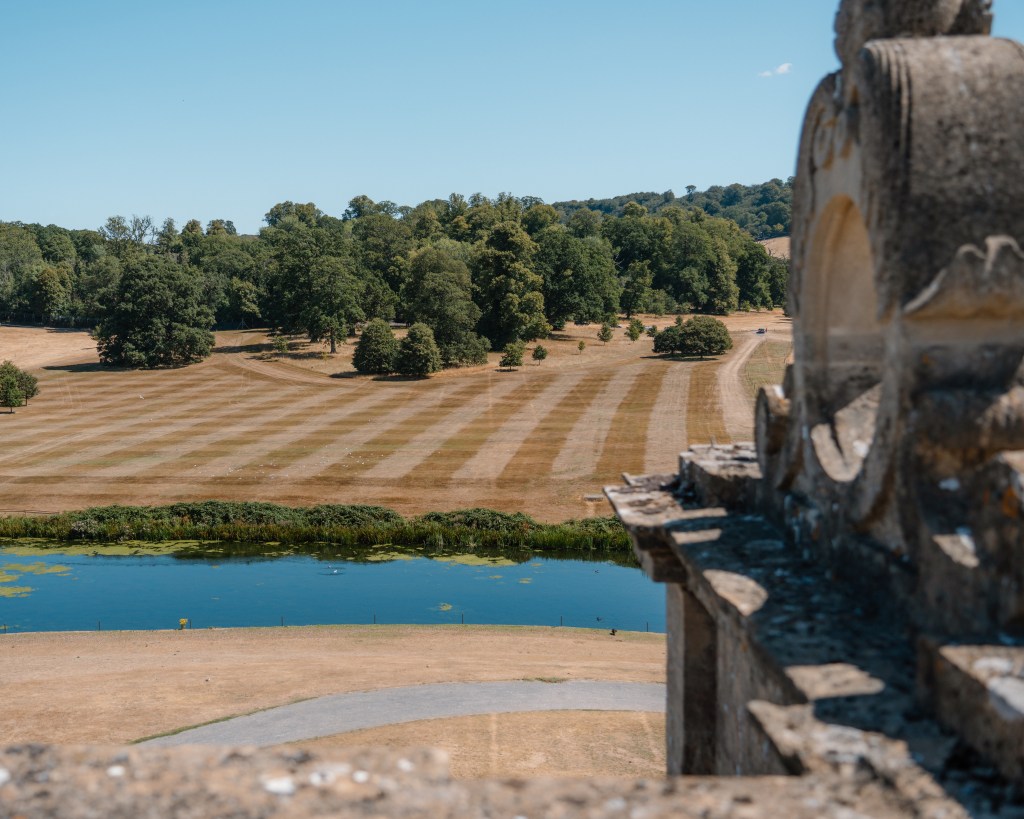
The scorched earth is revealing yesteryear’s secrets at Longleat, including signs of the long-lost watermill fed by the “leat” believed to have given the Wiltshire estate its name.
Guests can now see more traces of the past than have been visible for decades, with the dry summer revealing parch marks across the historic landscape.
Parch marks form when buried walls, foundations or paths affect the depth and moisture of the soil above them. In dry weather, grass over these shallower areas dries faster, revealing hidden features as visible outlines.
At Longleat, the marks include:
- The site of a watermill which pre-dates 16th-century Longleat House and was fed by a long man-made stream, or leat.
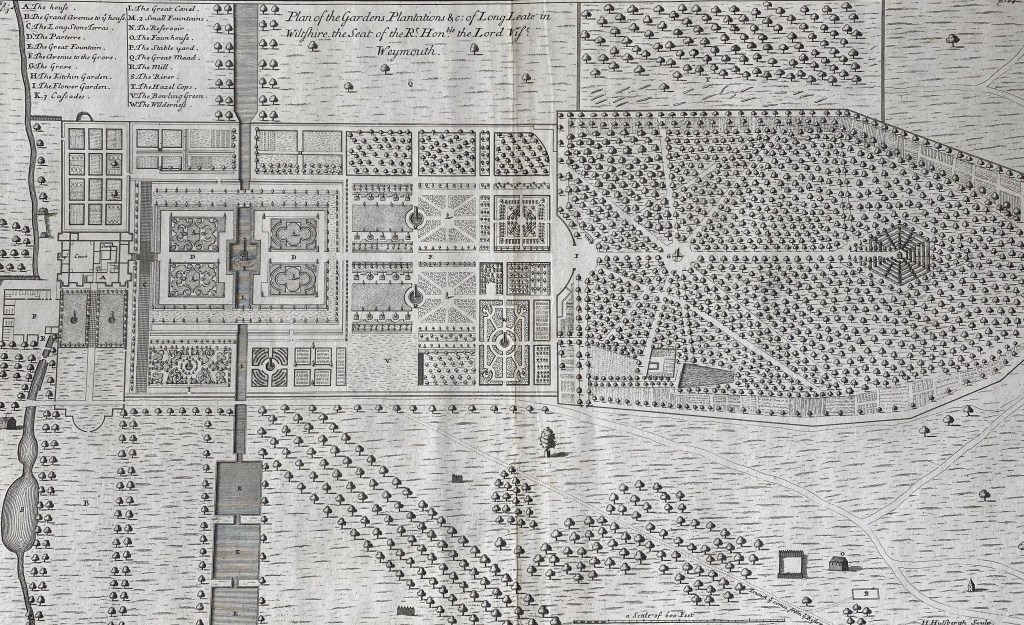
- Traces of a criss-cross parterre from the once extensive formal gardens, later transformed by Capability Brown. Parterres are formal garden features made up of symmetrical beds, low hedges and gravel.
- Two small fountains, the Great Avenue leading to the Grove – the site of a menagerie in the 1730s and now the Safari Park’s Wolf Wood – and other historic paths and garden features.
- The sweeping carriage drive which brought visitors to the front steps of the House from the mid-18th century until the 1950s.
Dr James Ford, Longleat’s curator, said: “A ‘leat’ is a West Country term for a man-made stream feeding a watermill, and the leat here is believed to have given Longleat its name.
“We think the rectangle visible near one of the modern fountains marks the location of the watermill that stood here from the Middle Ages, when Longleat Priory occupied the site, until the middle of the 18th century. The mill is shown in early views of Longleat.

“The parch marks also reveal the locations of earlier lost walls in front of the House, and these, along with the later carriage drive, are among the easiest features for visitors to spot when they visit.
“Drone footage has revealed the clearest evidence in memory of the vast formal gardens east of the House, including two small fountains, the Great Avenue and paths matching historic views.
“It also shows unrecorded features, including a criss-cross parterre not documented in any known images. This provides exciting evidence of how the gardens evolved after their introduction by the 1st Viscount Weymouth in the 1680s.

“Altogether, these marks offer a rare glimpse of earlier phases of Longleat’s landscape, from its medieval priory origins to its later formal gardens and 18th-century redesign,” said James.
Pictures
Plan of Longleat’s gardens by Colen Campbell, 1725






Leave a comment