
Materials: a key challenge in the environmental transition
With the development of electrification, CO₂ emissions from vehicle use are falling sharply. The focus is therefore shifting increasingly towards materials, which can represent nearly 50% of an electric vehicle’s carbon footprint across its entire life cycle. To make this footprint smaller and limit the use of virgin resources, it is essential to look at the origin, manufacture and second life of the materials used, such as steel, aluminium, plastics, textiles and glass.
In a world of finite resources, Renault is taking action on several complementary fronts to reduce the environmental impact of its vehicles: limiting the use of virgin raw materials, incorporating more recycled materials and prioritising materials with a low carbon footprint.
A long-term commitment for Renault Group
This approach is underpinned by long years of expertise, dating back to 1991 and the inclusion of recycled plastics in first-generation Clio. Since then, Renault has gradually expanded the use of recycled materials[1] to many parts of its vehicles.
Today, Renault is achieving high levels of circularity across its models, with, for example, at least 33.9% of materials sourced from the circular economy[2] on New Clio Esprit Alpine, and 100% of recycled textiles on Renault 5[3] E-Tech electric. This approach also extends to other materials: plastics, with up to 20% of materials recycled from end-of-life vehicles in the dashboard of Master; glass, with over 50% of circular materials in the Solarbay® panoramic glass roof offered on Scenic, Symbioz, Espace and Rafale; and aluminium, with 50%[4] of circular materials in the wheels of New Clio Esprit Alpine. All these applications demonstrate Renault’s commitment to including more recycled content in its vehicles, for a growing number of parts and materials.
renative®, giving the circular economy greater visibility in Renault vehicles
To make these advances more visible and easier to understand, Renault is extending its renative® brand to new vehicles. Created by Renault as an umbrella brand, renative® is a single identity bringing together all the initiatives and solutions developed by the Renault Group to advance the circular economy. It showcases the progress made to limit the consumption of primary resources and promote their reuse.
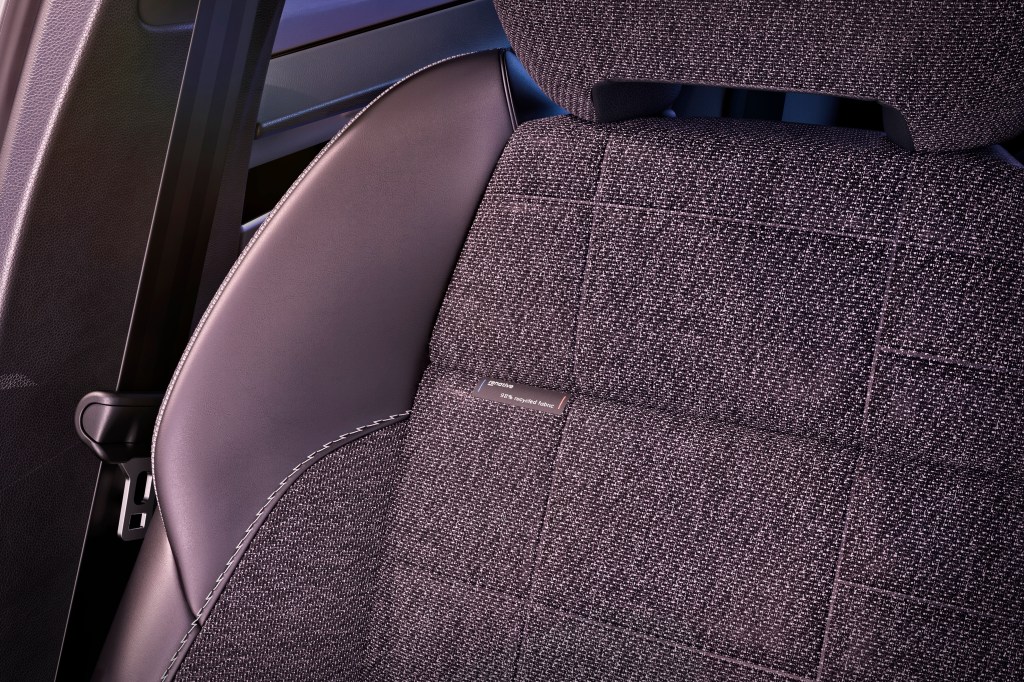
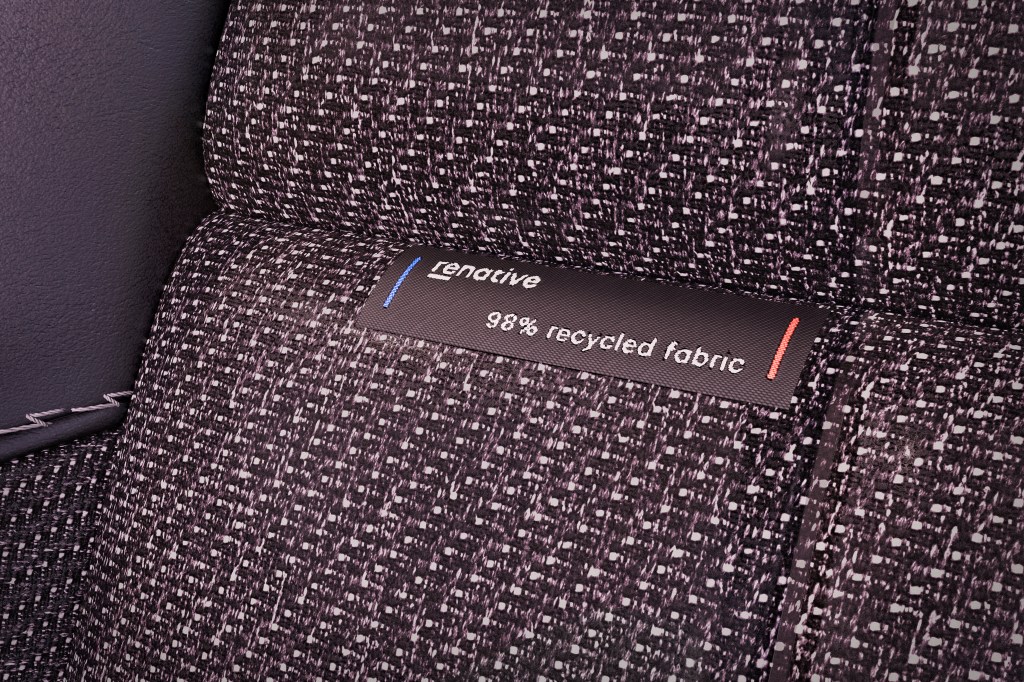
Scenic E-Tech electric is the first Renault vehicle to feature the renative® umbrella brand with new seats on the Techno finish, highlighting the use of textile containing a remarkable 98% recycled material. This first application marks the extension to new vehicles of a name already present in after-sales.
With renative®, Renault customers will be able to identify vehicle parts integrating exceptionally high proportions of recycled material. The name gives greater visibility to Renault’s progress in advancing the circular economy, without compromising on quality and durability.
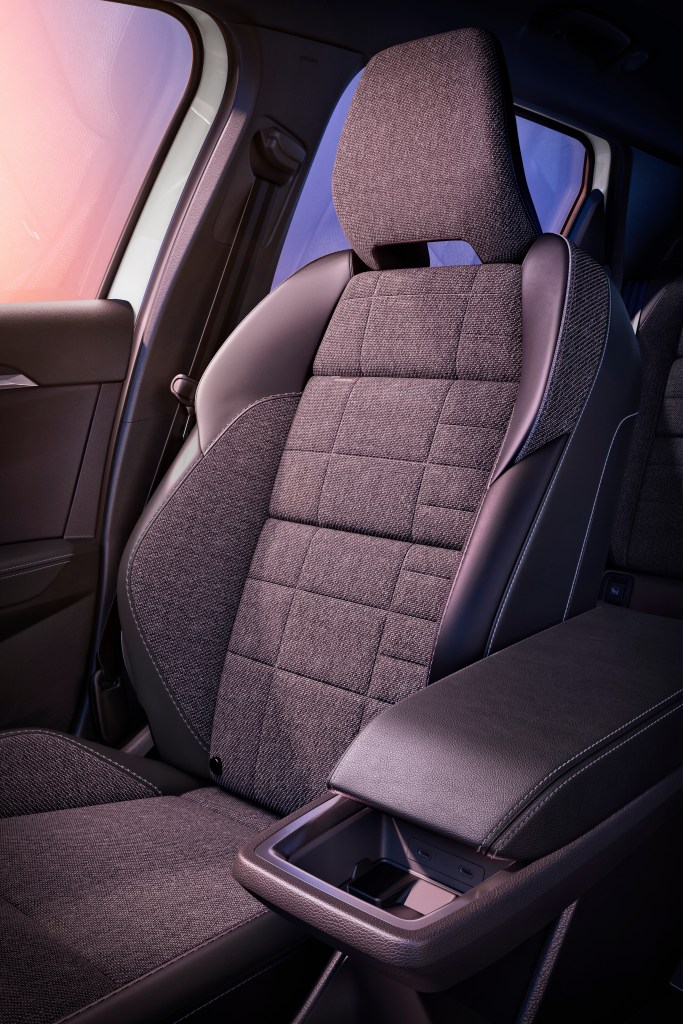
Inside Scenic E-Tech electric, the seats are a tangible example of this approach. Moreover, recycled materials are also present in other vehicle parts: the structure of the dashboard, for example, is 80% recycled polypropylene, while the headliner material is made from 99.5% recycled plastic bottles. The purpose of the renative® umbrella brand is therefore not to exhaustively designate all parts containing recycled materials, but to highlight those that stand out for a remarkable level of integration. Following this first application to the seats of Scenic (Techno finish), it could be extended to other parts and material families, including plastics, aluminium, steel and glass, across the entire Renault range.
By giving these actions shared visibility, Renault is seeking to raise awareness amongst its customers of its commitment over more than 30 years to advancing the circular economy, and also of the role of innovation in limiting the consumption of primary resources, without compromising on quality and durability.
A renative® offering already established in after-sales
Implemented by Renault Group after-sales, renative® already includes over 2,000 references sourced from the circular economy: remanufactured parts, reconditioned batteries, repaired electronic components, reused parts, re-refined oils and accessories incorporating recycled materials.
All these references combine genuine manufacturer quality with competitive pricing and a lower environmental impact. A remanufactured part is 30% cheaper than a new equivalent, on average, while meeting the same requirements in terms of performance, quality and safety. These parts extend the service life of components and support customers in the maintenance of their vehicles.
The renative® brand name is used in different ways for new vehicles and after-sales: recycled materials in OEM parts for new vehicles, and a second life for parts, along with services in circular maintenance and repairs, in after-sales. However, all applications share the same ambition: to reduce the impact on resources throughout the vehicle’s life cycle.






Leave a Reply